Sizes and options below are enquiry examples. Ask the quotation to confirm product designation, material, dimensions, load and deflection evidence, finish or resin, standards and editions, inspection documents, manufacturing party, packing and schedule.
Open the RFQ checklist →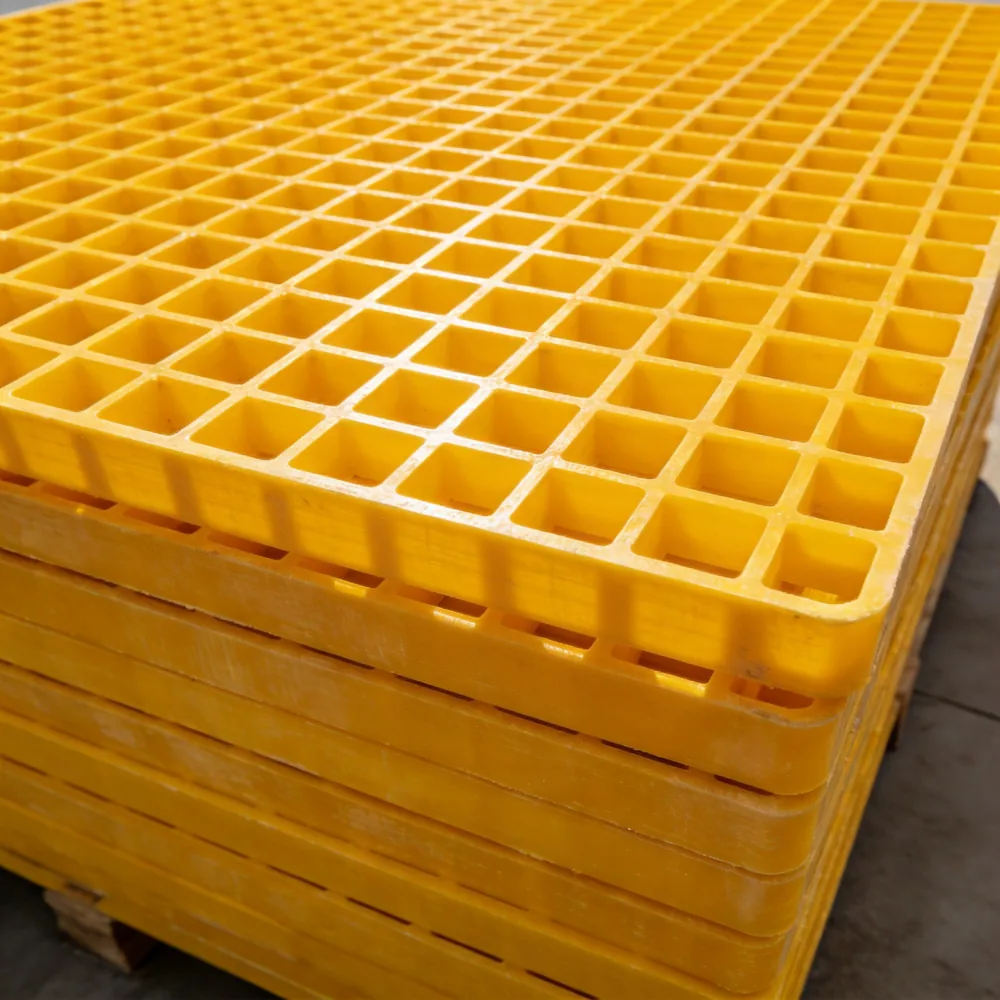
Start with construction and the project environment
Use the molded, pultruded and covered-panel pages to describe the configuration you need. A covered surface is an additional configuration question, not a resin specification. See the molded versus pultruded comparison for the detailed decision.
FRP grating specification fields
There is no single thickness, mesh, color or resin that describes this entire family. Record the requested configuration and ask the quotation to confirm what can be supplied.
| Construction | Molded or pultruded; identify any bonded cover and the complete panel designation. |
|---|---|
| Geometry | Depth, mesh or bar spacing, openings, panel dimensions, bearing direction and support layout. |
| Resin and exposure | Exact resin designation, chemical names, concentrations, mixtures, temperature and exposure pattern. |
| Surface and appearance | Requested surface treatment and color; confirm actual finish and color separately from performance. |
| Loads and handling | Project load cases and deflection criteria; request panel-specific mass and handling information. |
| Documentation | Relevant product data, test methods and reports, fabrication drawings and required inspection records. |
Turn broad claims into document requests
- Chemical resistance: request a compatibility assessment for the named resin and actual exposure.
- Fire or electrical requirements: state the project's required test and acceptance criteria; request evidence for the exact product.
- Surface performance: define the service conditions and required evidence, rather than assuming any textured surface is suitable.
- Weight: request the mass of the specified panel, including its cover and accessories where applicable.
- Covered panels: describe drainage or containment needs separately; do not assume a cover makes the assembled floor liquid-tight.
This page does not assign fire, electrical or structural suitability. Safety-critical choices require the responsible qualified person's review. Third-party product approvals, resin tables and demonstrations must not be treated as evidence for an unspecified GoGrating configuration.
FRP product pages
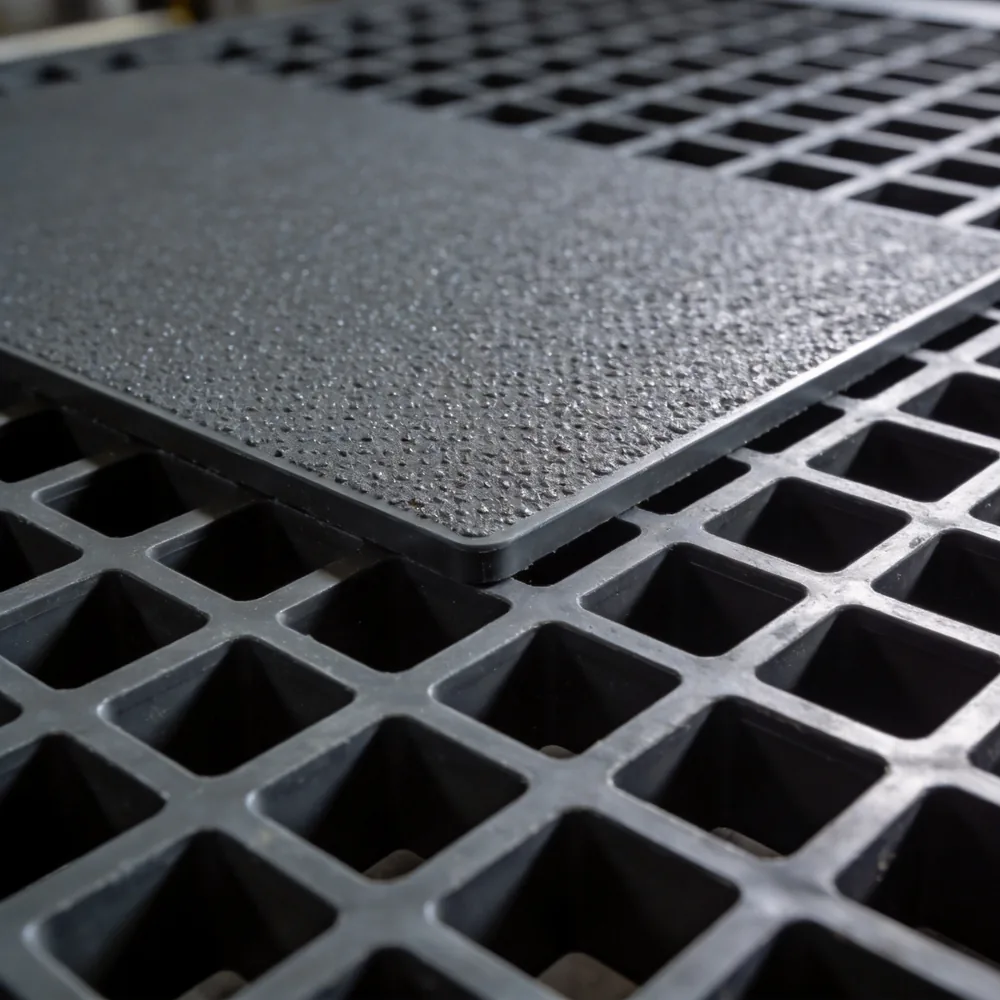
Covered FRP Grating
Covered-panel configuration, openings and top-surface requirements.
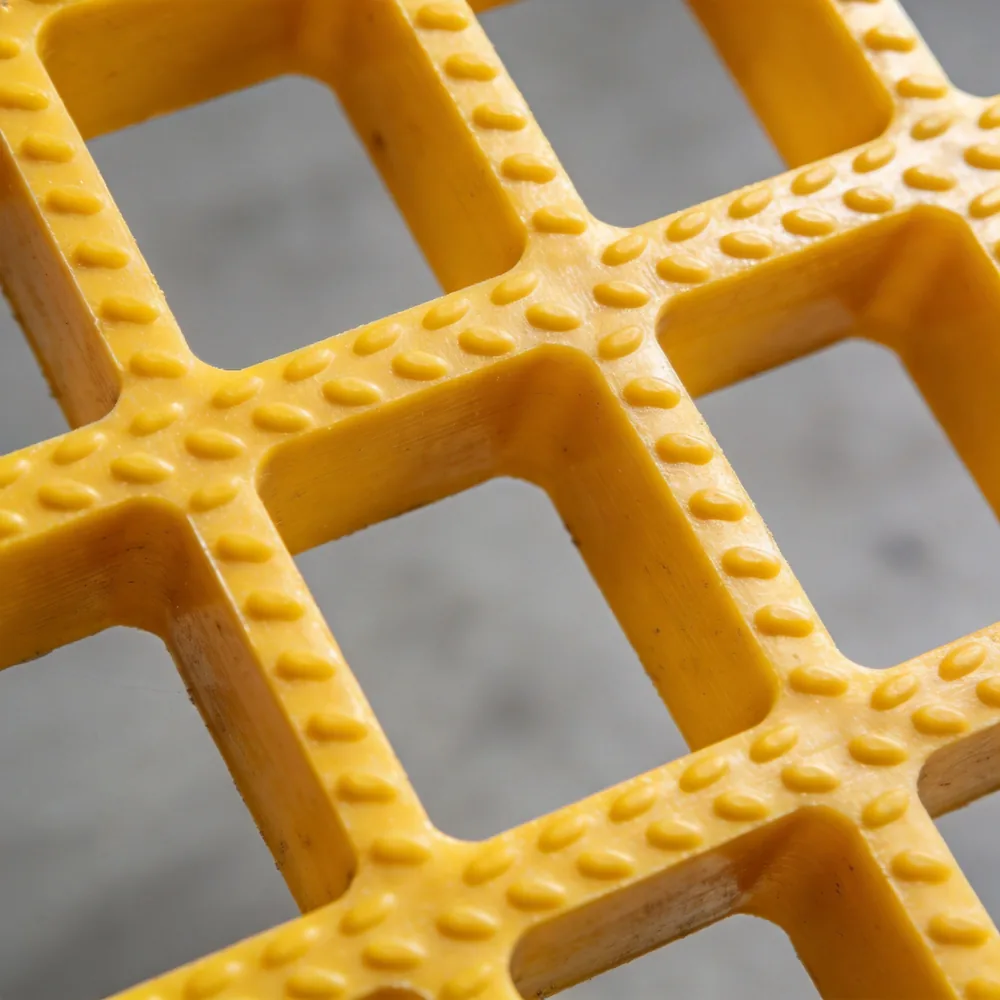
Molded FRP Grating
Molded panel construction, resin and mesh information for enquiry.
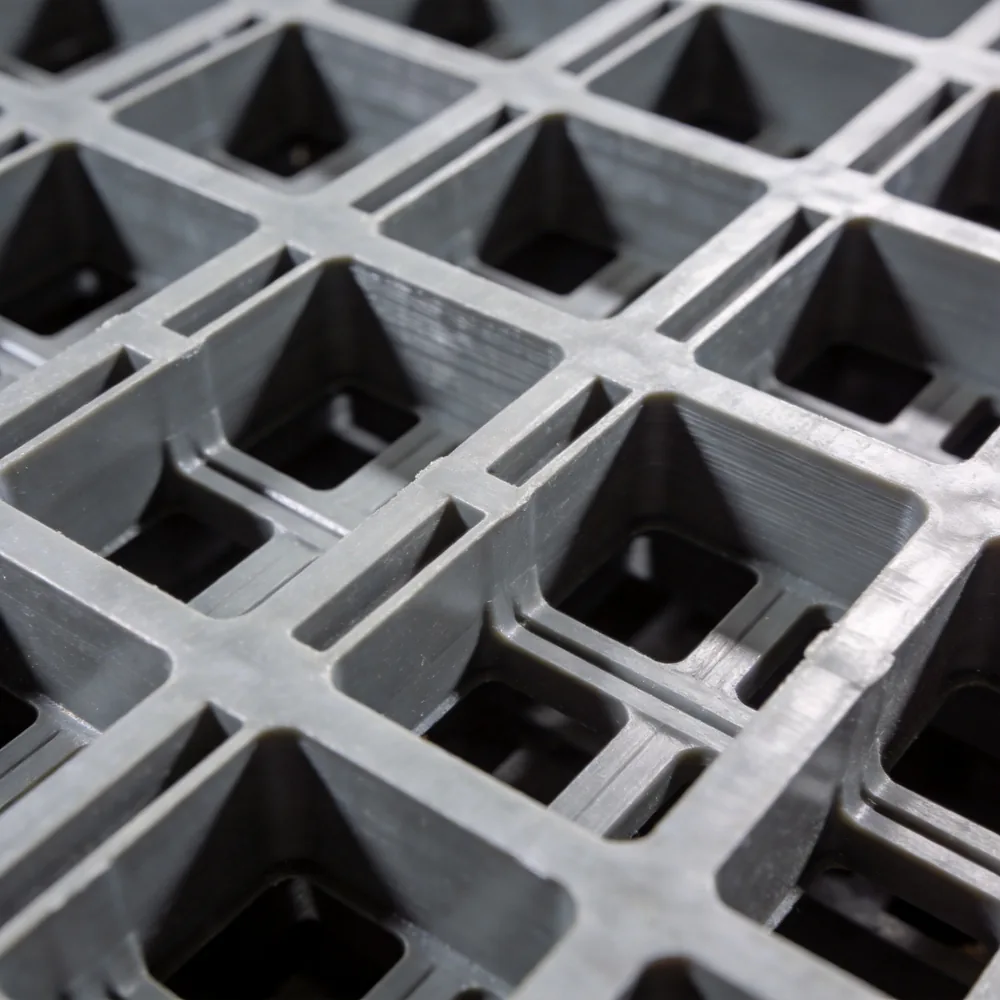
Pultruded FRP Grating
Pultruded bar construction and bearing-direction information for review.
Reference resources
Checked 4 September 2026. Strongwell's grating literature illustrates distinct molded and pultruded product families. Its grating enquiry worksheet identifies application and temperature inputs, while its selection article points readers to product-specific corrosion guidance. These are third-party examples, not GoGrating manufacturing, performance or certification claims.
Frequently Asked Questions
Can panels be prepared from my project drawings?
Send a dimensioned panel schedule with panel IDs, supports, openings and required edge details. Ask the quotation to confirm the fabrication scope and drawing-review process before manufacture.
Which dimensions and colors are available?
Submit the requested configuration and quantity. Dimensions, finish or color, tolerances and availability must be confirmed in the written quotation; this page is not a stock inventory.
What determines the quotation and lead time?
The supplier needs the quantity, configuration, fabrication scope, required documents, packing and destination. Price and schedule are confirmed after these inputs have been reviewed.
Which documents should I request?
Identify the governing standard and edition, required drawings, material or resin identification, applicable product data and inspection records. Ask the supplier to confirm which documents will accompany the quoted configuration.
Ready to spec your grating?
Project specifications, documentation needs and export packing are confirmed with each quotation.
Get Engineering Support →