Sizes and options below are enquiry examples. Ask the quotation to confirm product designation, material, dimensions, load and deflection evidence, finish or resin, standards and editions, inspection documents, manufacturing party, packing and schedule.
Open the RFQ checklist →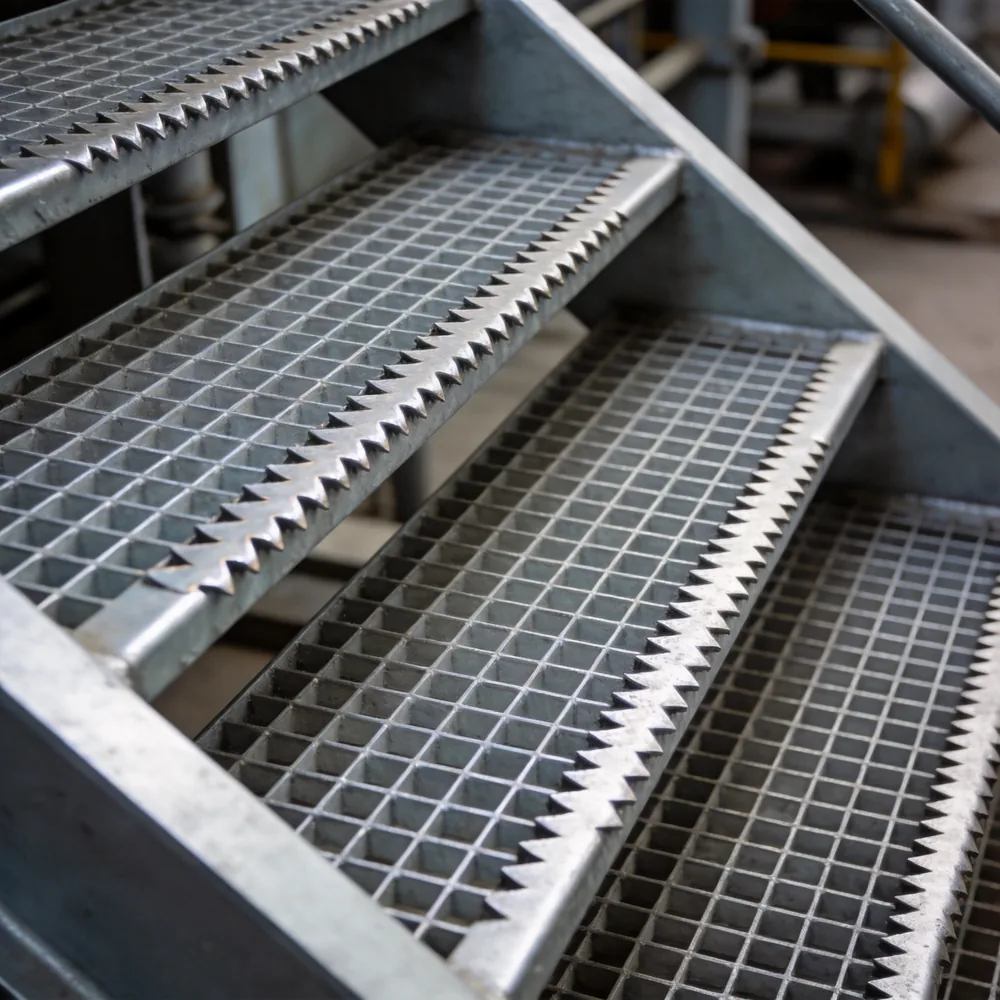
Industrial Stair Treads — Steel & FRP Grating Treads
Minimum order, production timing, packing, trade terms and destination logistics are confirmed only after the quantity, configuration, process scope and delivery requirements have been reviewed.
What Are Grating Stair Treads?
A grating stair tread is a panel of welded steel bar grating or molded/pultruded FRP grating cut to tread size and finished with two functional details: end plates (carrier plates) welded or bonded to each side and pre-punched for bolting to the stair stringer, and a nosing along the leading edge — typically angled checker plate on steel treads or an abrasive grit strip on FRP — that gives the foot a defined, high-visibility, anti-slip edge.
The open-grid surface drains water, oil, mud, and snow straight through, which is why grating treads are the default choice on platforms, mezzanines, towers, and plant stairways. See our applications overview for typical use cases.
Named standards are purchaser specification inputs, not a claim that every configuration is certified. State the required standard and edition, acceptance criteria, inspection points and documents; the quotation must confirm the applicable scope.
Types of Stair Treads
FRP grating treads are cut from molded or pultruded fiberglass grating in orthophthalic, isophthalic, or vinyl ester resin systems, with a gritted anti-slip top and grit nosing. They are the right call where corrosion, electrical conductivity, or weight rules out steel — chemical plants, wastewater treatment, offshore, and marine docks. Covered (solid-top) treads, in steel checker plate or FRP covered grating, suit areas where falling objects or visual screening matter more than drainage.
GoGrating accepts enquiries for this product family. The written quotation must identify the legal supplier, manufacturing party and location, available construction and materials, fabrication scope, inspection documents, packing and delivery terms. Website examples are not order commitments.
Stair Tread Specifications
| Bearing bar size | 20×3 mm to 100×9 mm (treads commonly 25×3 – 65×5 mm) |
| Bearing bar pitch | 30 mm / 40 mm metric; NAAMM 19-space and 15-space series |
| Cross bar pitch | 50 mm / 100 mm (2" / 4") |
| Tread width | 150 – 305 mm typical, cut to order |
| Tread length | Cut to stringer span per drawing |
| Anti-slip surface | Serrated bearing bars (steel) / grit top (FRP) / plain |
| Nosing | Checker-plate angled nosing, abrasive grit nosing, or plain edge |
| End plates | Pre-punched carrier plates, bolt-hole pattern to spec |
| Surface treatment | Hot-dip galvanized (ASTM A123) / painted / untreated / stainless 304 & 316 |
| Standards | Reference, edition, conformity scope and documents to be confirmed in the quotation |
- Serrated steel or grit-top FRP anti-slip surfaces
- Pre-punched end plates for bolt-on installation
- Checker-plate or abrasive angled nosing
- Required standards, editions, inspections and documents confirmed per quotation
- Required standards, editions, inspections and documents confirmed per quotation
- Made to your drawings — CAD files welcome
Frequently Asked Questions
Can you fabricate stair treads to our project drawings?
GoGrating accepts enquiries for this product family. The written quotation must identify the legal supplier, manufacturing party and location, available construction and materials, fabrication scope, inspection documents, packing and delivery terms. Website examples are not order commitments. Submit drawings with the enquiry so scope can be reviewed before quotation.
Is there a minimum order quantity for grating stair treads?
Minimum order, production timing, packing, trade terms and destination logistics are confirmed only after the quantity, configuration, process scope and delivery requirements have been reviewed.
What is the typical lead time for custom stair treads?
Minimum order, production timing, packing, trade terms and destination logistics are confirmed only after the quantity, configuration, process scope and delivery requirements have been reviewed.
Are your stair treads OSHA compliant?
Named standards are purchaser specification inputs, not a claim that every configuration is certified. State the required standard and edition, acceptance criteria, inspection points and documents; the quotation must confirm the applicable scope.
Ready to spec your grating?
Project specifications, documentation needs and export packing are confirmed with each quotation.
Get Engineering Support →