Water & Wastewater Treatment Plant Grating
Content status: illustrative RFQ planning guide, not a completed customer project. No installation result, service life or customer endorsement is asserted.
Prepare a wastewater treatment grating enquiry using the area schedule and approved project requirements. This page organises procurement inputs; it is not a design, installation or acceptance instruction.
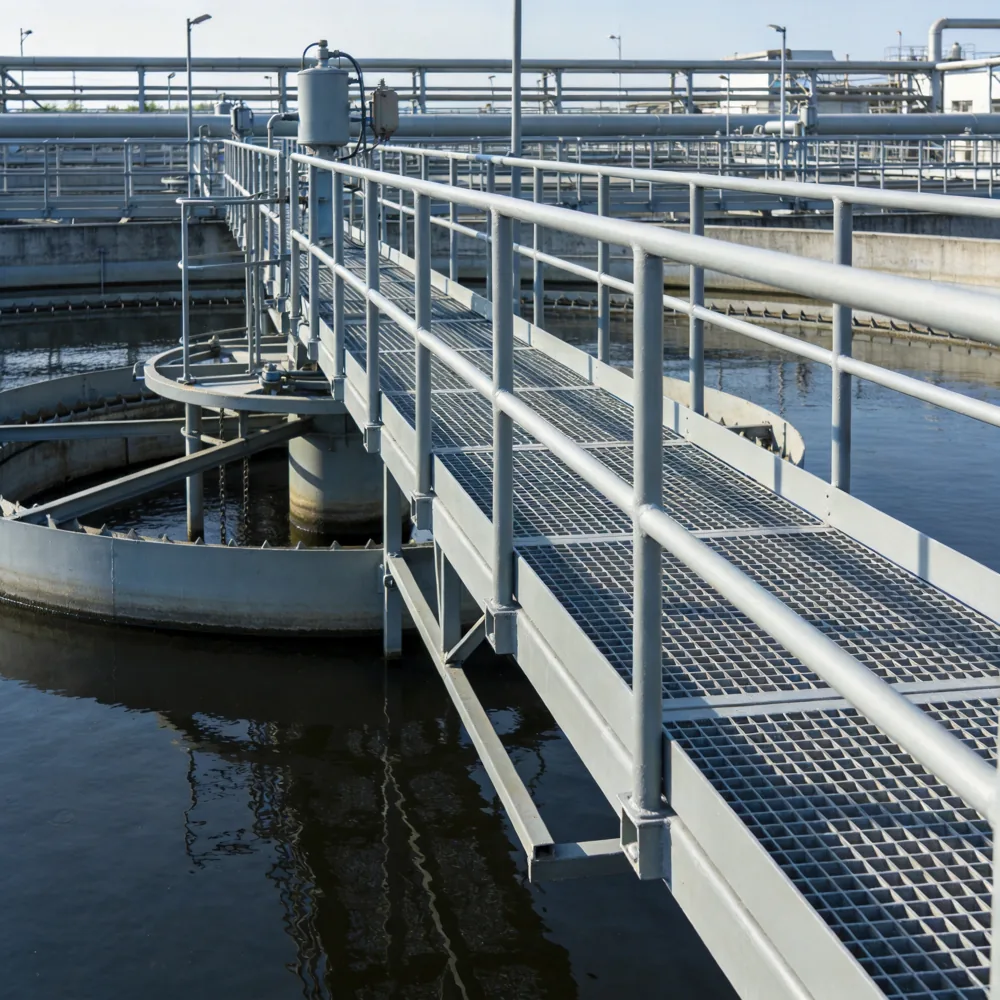
Engineering considerations
Provide an area schedule for clarifiers, aeration basins, channels, screening rooms and dosing areas. Include normal exposure and cleaning conditions.
Identify each cover as drainage, equipment access or another specified function. Supply the required opening, removal and fixing details rather than assuming one cover serves all purposes.
Distinguish pedestrian loading from equipment or vehicle loading. Attach the approved load basis and support drawings, and flag any missing information before quotation approval.
Specification approach
Use the application selection guide to identify review questions. Ask the supplier for an exact configuration and a list of assumptions or exclusions, then obtain project approval before ordering.
Items to specify
Include drawing revision, panel marks, quantities, dimensions, cutouts, surface and fixing requirements. Identify accessories and spare panels separately. Confirm packing, destination and document deliverables in the quotation.
Standards & compliance
List the required standards and editions and the project evidence schedule. Confirm which reports and records are available for the proposed product. A standard reference on a website is not certification or project acceptance.
FAQ
Should the whole plant use one grating material?
Do not assume a single specification fits all areas. Compare the exposure, loads, access needs and evidence requirements in a zone-by-zone schedule.
Does FRP provide a guaranteed lifespan in wastewater service?
This page gives no lifespan guarantee. Ask for the exact product documentation, exposure limitations and inspection or maintenance information applicable to the proposed use.
Molded FRP grating · Water treatment applications · What is FRP grating? · All project types
Have a project like this?
Send your area schedule, drawings and evidence requirements for quotation review. Ask for confirmation of the offered scope, exclusions and delivery assumptions.
Request a Quote →