Chemical Processing Plant Grating
Content status: illustrative RFQ planning guide, not a completed customer project. No installation result, service life or customer endorsement is asserted.
Prepare a chemical plant grating enquiry using the area schedule and approved project requirements. This page organises procurement inputs; it is not a design, installation or acceptance instruction.
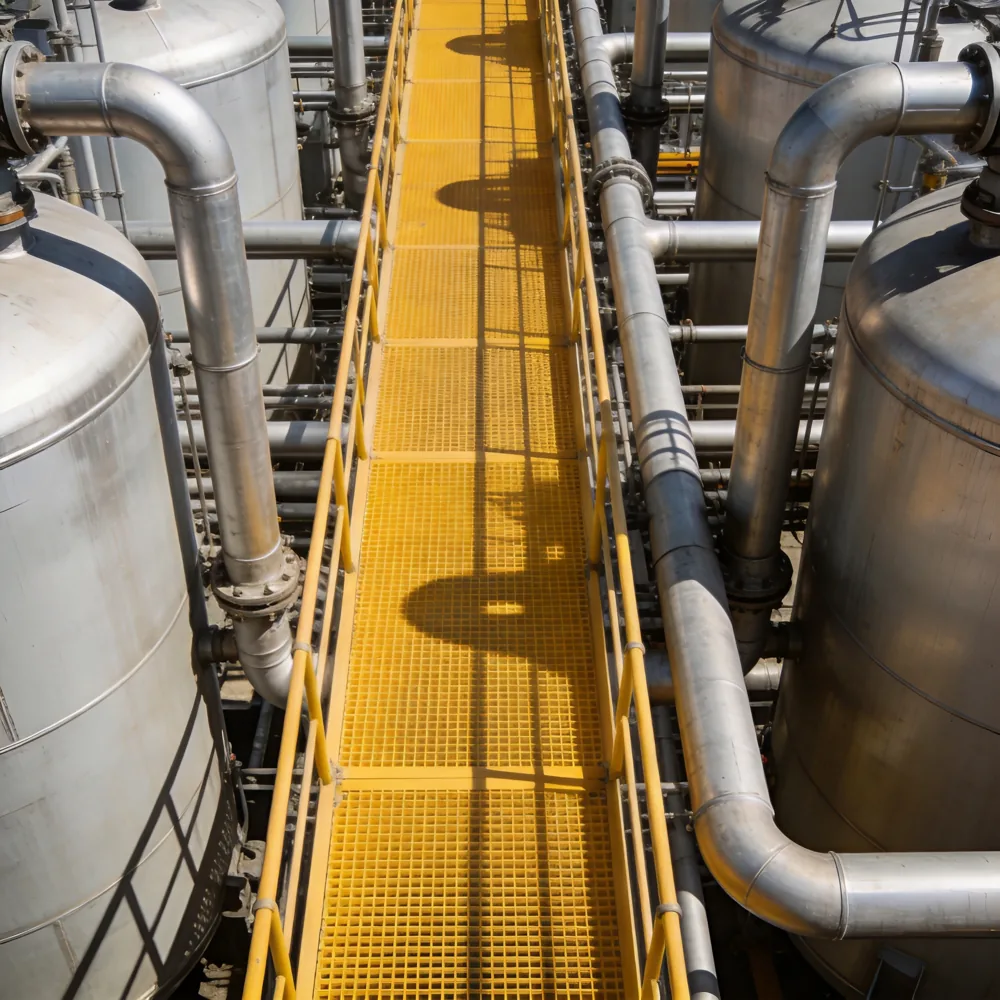
Engineering considerations
Attach a chemical schedule covering process fluids, mixtures, cleaning agents, concentrations and temperatures. Mark the exposure type for each panel area.
Identify the required product evidence and the person responsible for accepting it. Record unresolved resin or alloy choices as open questions, not approved substitutions.
Attach approved loading and support drawings, panel marks, cutouts and removable sections. Do not infer allowable spans from a product-family name.
Specification approach
Use the application selection guide to identify review questions. Ask the supplier for an exact configuration and a list of assumptions or exclusions, then obtain project approval before ordering.
Items to specify
Include drawing revision, panel marks, quantities, dimensions, cutouts, surface and fixing requirements. Identify accessories and spare panels separately. Confirm packing, destination and document deliverables in the quotation.
Standards & compliance
List the required standards and editions and the project evidence schedule. Confirm which reports and records are available for the proposed product. A standard reference on a website is not certification or project acceptance.
FAQ
Which FRP resin should we specify?
Provide the full exposure schedule and request applicable data for the exact offered resin and product. A general resin-family ranking is not enough to approve chemical service.
Does chemical resistance establish fire or electrical suitability?
No such approval is made by this page. List those requirements separately and have the project team review the relevant product evidence.
FRP grating · Chemical plant applications · FRP vs galvanized steel · All project types
Have a project like this?
Send your area schedule, drawings and evidence requirements for quotation review. Ask for confirmation of the offered scope, exclusions and delivery assumptions.
Request a Quote →